
OLYMPUS DIGITAL CAMERA 
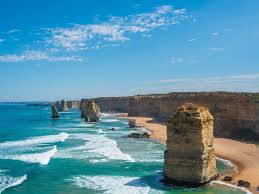
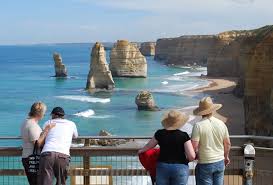
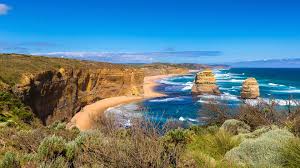
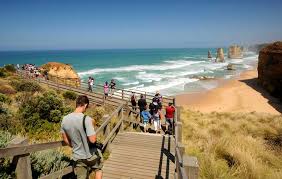
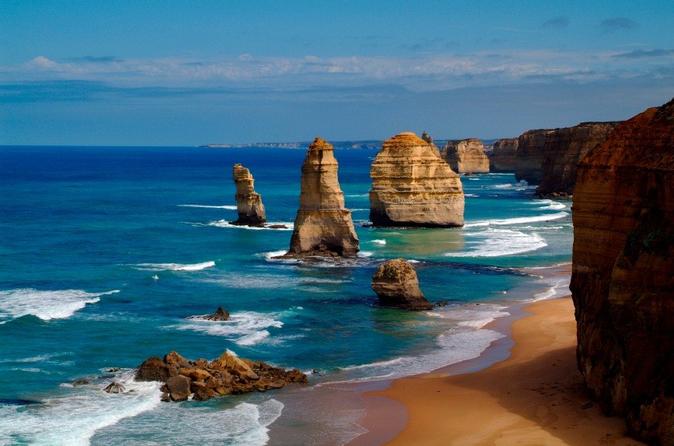
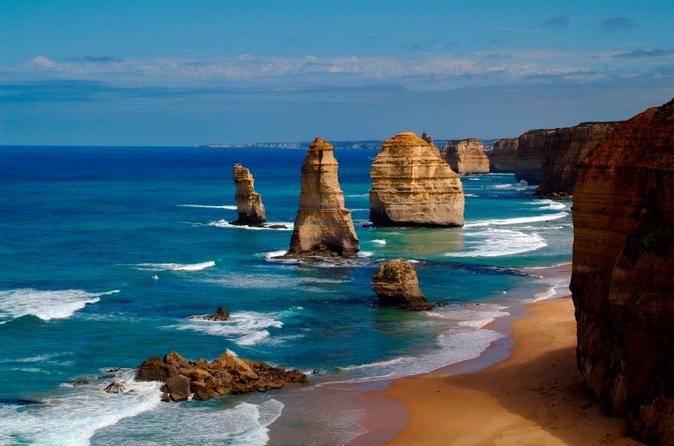
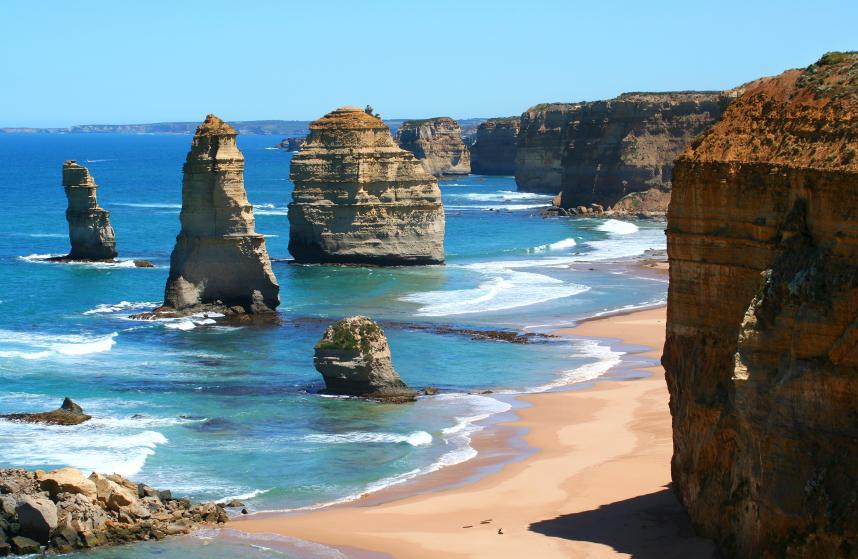
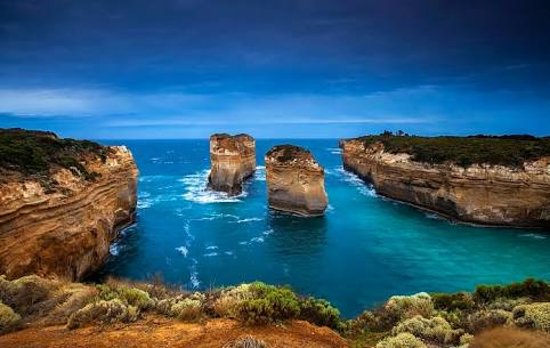
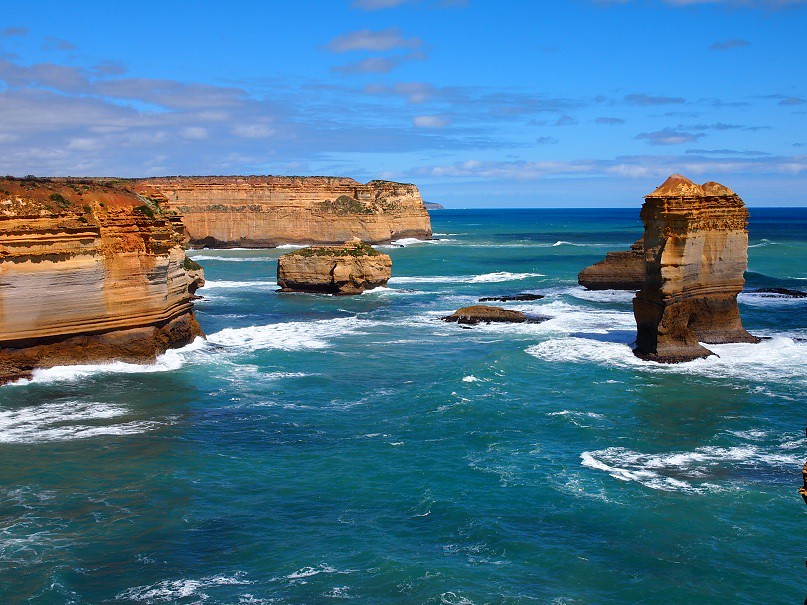
The Twelve Apostles is a collection of limestone stacks off the shore of Port Campbell National Park, by the Great Ocean Road in Victoria, Australia. Their proximity to one another has made the site a popular tourist attraction. Witness the rugged splendour of the famous 12 Apostles, magnificent rock stacks that rise up majestically from the Southern Ocean on Victoria’s dramatic coastline.
Limestone cliffs
Created by constant erosion of the limestone cliffs of the mainland beginning
10–20 million years ago, the stormy Southern Ocean and blasting winds gradually
eroded the softer limestone, forming caves in the cliffs.
The caves eventually became arches and when they collapsed rock stacks up to 45 metres high were left isolated from the shore. View the 12 Apostles at sunrise and sunset as they change colour from dark and foreboding in shadow to brilliant sandy yellow under a full sun.
The History of 12 Apostles
The Southern coast of Australia is carved by the winding Great Ocean Road, and
while there are plenty of attractions along the way, there are none quite as
iconic as the incredible 12 Apostles. These magnificent limestone stacks tower
above the rough water of the Shipwreck Coast and have become a popular tourist
destination for people from around the world.
Located on the border of the Port Campbell National Park in Victoria, this has
become the highlight for all who take the trip along the Great Ocean Road.
Although they are called the 12 Apostles, there are only 8 pillars left with
the ninth having collapsed because of erosion in July of 2005. Since the crash
of this 50 m high apostle, the tallest one is now only 45 m, which is still
unquestionably impressive. These formations were not always called the 12
Apostles, though, before this, they were known as the Sow and Piglets, the sow
being the nearby Mutton Bird Island and the piglets being the 12 Apostles.
Over thousands and thousands of years these apostles have been subject to the ocean’s might, and as the wind and waves have buffeted the cliffs of Shipwreck Coast, the earth has eroded away, leaving behind a handful of pillars in its wake. When you take a closer look at them, you’ll find that these stacks are made up of layers of varying soil types, the main one being the limestone, but the others being a mixture of clay and mudstone. This is the reason for the irregular shape of the erosion. The mudstone and clay layers tend to be narrower because of the lower density of the soil, which is much more easily eroded by the weather than the slightly denser limestone. Each year the waves eat away on average another 2cm of limestone at the base of these pillars.
These spectacular stacks of limestone are spread out along 17 km of the Shipwreck Coast, providing an incredibly scenic drive alongside one of Australia’s most beautiful roads. The very best time to view them is during sunrise or sunset, as the limestone is illuminated by the fiery orange light of the sun, presenting you with a glorious photo opportunity of the Apostles in all their splendour.
The beautiful pillars along the Shipwreck Coast known as the 12 Apostles have a rich and exciting history that has led them to become iconic Australian rock formations. Around the shores of the 12 Apostles you can also escape the sand and the sea to explore the delightful gem like towns that populate the coast, you can walk for hours along the ragged carved cliffs and you can even traverse the canopied trails and blooming bright flora of the rainforest. The 12 apostles are a mighty sight and will capture your soul in an instance.
The most interesting facts in 12 Apostle, Australia
•The huge rock stacks rise up to the southern great ocean road.
•The limestone cliffs are created by storms and blasting winds, gradually
soften the limestone, foaming caves in the cliffs
•There are only eight apostles left remains are fallen
•The most recent one collapsed on 03rd July 2005
•This is the great Romantic destination where people love to visit
 Sri Lanka Pearl of Asia